Seasonal Shifts in Loyalty Mechanics Among Britain’s Regulated Betting Operators
Avery Foster · Oct 29, 2026
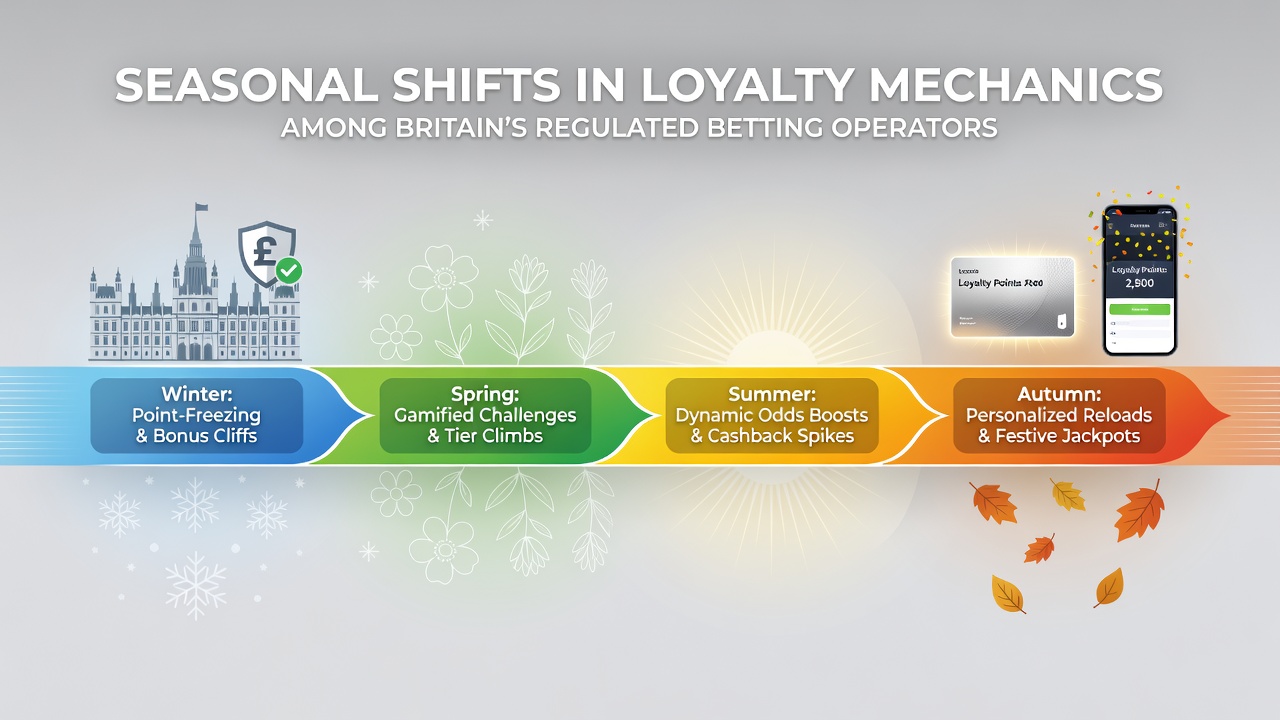
Seasonal Shifts in Loyalty Mechanics Among Britain’s Regulated Betting Operators
Britain’s regulated betting operators adjust loyalty mechanics throughout the year to align with major sports calendars, and these changes affect how customers accumulate and redeem points, tier status, and reward tiers. Data from industry reports show that football season periods drive heavier emphasis on accumulator-related loyalty multipliers, while horse racing off-seasons prompt operators to introduce alternative reward structures such as cashback on smaller stakes or bonus entries into virtual events. Observers note that these adjustments occur because participation patterns shift measurably between peak summer racing months and winter football schedules, prompting firms to recalibrate earning rates and redemption options accordingly.
Patterns Across Major Sporting Seasons
Operators track customer activity data that reveals higher engagement volumes during Premier League months, and they respond by layering seasonal loyalty boosts onto existing tier systems. For instance, points multipliers often increase for bets placed on specific leagues during October windows, and similar recalibrations appear in spring when flat racing resumes. Research from the Australian Gambling Research Centre indicates that seasonal timing of such mechanics correlates with sustained activity levels across regulated markets, and British operators follow comparable approaches even though regulatory frameworks differ. Those who study these patterns find that firms introduce limited-time loyalty challenges tied to event calendars, such as completing a set number of qualifying bets within a racing festival period to unlock elevated cashback percentages.
Adjustments in Points and Tier Structures
Loyalty points accrual rates frequently change when one season transitions into another, and operators communicate these modifications through app notifications and account dashboards. During periods of lower traditional racing volume, several firms shift emphasis toward virtual sports or international fixtures by awarding accelerated points that help customers maintain tier status without requiring larger wager volumes. Figures from the Nevada Gaming Control Board annual summaries reveal that loyalty program retention metrics improve when operators synchronize reward resets with calendar events, and British entities apply parallel strategies to manage customer movement between seasons. One documented case involved an operator introducing double points on evening football markets in late autumn to offset reduced daytime activity, while another extended expiration windows on accumulated points during the transition from summer racing to winter codes.
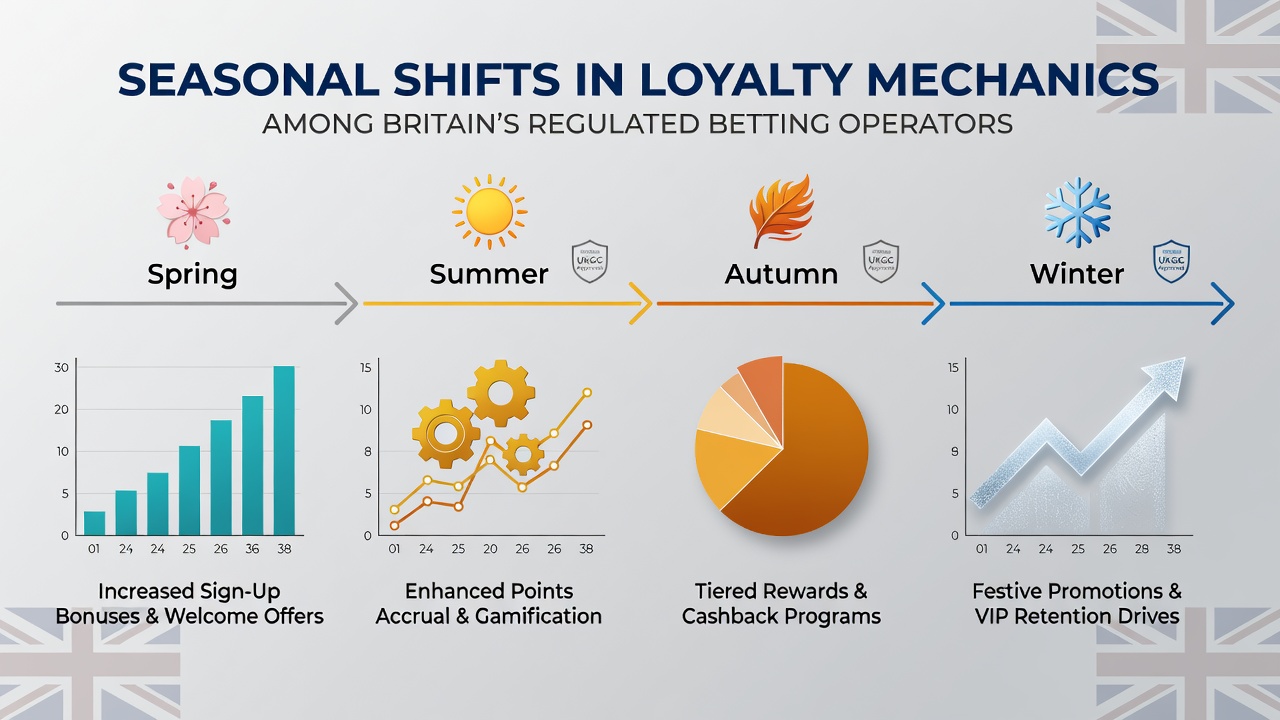
Redemption catalogues also undergo seasonal updates, and customers encounter different prize options depending on the time of year. Summer months often feature experiential rewards linked to major racing festivals, whereas winter periods expand digital content or merchandise categories. These catalogue rotations occur because operators monitor redemption data that shows preference shifts aligned with external events, and they adjust inventory to maintain perceived value. In October 2026 several operators announced revised loyalty calendars that front-loaded football-focused rewards ahead of the new league cycle, while simultaneously extending racing-related bonuses into early winter to bridge the gap between seasons.
Regulatory Context and Data Reporting
British operators operate under licensing conditions that require transparent communication of loyalty terms, and seasonal mechanics must remain compliant with these obligations. Reports compiled by the Ontario Lottery and Gaming Corporation highlight how data-driven adjustments in loyalty parameters can support longer-term engagement when they coincide with predictable activity dips, and similar evidence appears in British market analyses. Operators therefore publish updated terms at the start of each major season, detailing altered earning rates, bonus point allocations, and any restrictions on combining seasonal offers with standard tier benefits. Those who review these disclosures find that changes typically take effect on fixed dates tied to sporting calendars rather than arbitrary internal decisions.
Customer segmentation plays a role in how seasonal loyalty mechanics are deployed, and operators apply different multipliers or challenges to distinct user groups based on historical betting patterns. High-volume participants may receive personalised seasonal targets, while newer accounts encounter simplified entry-level loyalty tracks during the same period. This segmentation approach draws on aggregated activity datasets that operators maintain to forecast participation across football, racing, and other verticals. Evidence suggests that such targeted seasonal mechanics help maintain overall programme participation even when core markets experience natural fluctuations.
Conclusion
Seasonal shifts in loyalty mechanics among Britain’s regulated betting operators reflect coordinated responses to sporting calendars and customer behaviour data. These adjustments encompass points multipliers, tier maintenance options, redemption catalogue rotations, and personalised challenges that operators implement at predictable intervals. Available industry figures indicate measurable alignment between these mechanics and activity patterns across different times of year, with further refinements documented as recently as October 2026. Operators continue to refine communication of these changes to meet regulatory standards while responding to observed seasonal trends in engagement.